Covid-19 in Haiti

IMG-20200501-WA0046.jpg

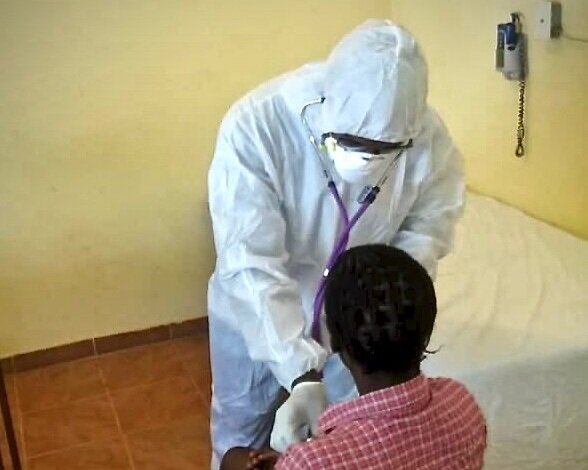
On May 1st Healing Art Missions’ Medical Director in Haiti, Dr. Jacques, sent an update on the current situation of Covid-19 in Haiti. We are sharing Dr. Jacques’ report with our supporters as direct insight into what the Haitian population is facing and how the HAM clinic in Dumay is responding. As for the Haitian government, according to Haitian Prime Minister, Joseph Jouthe, Haiti was in a fragile state disturbed by political turmoil and socio-economic problems even before the arrival of Covid-19. The Government of Haiti has announced the extension of the state of health emergency until 20 May 2020, though subcontracting factories have reopened on 20 April with adopted measures to prevent the spread of the virus.

Dr. Jacques has been participating in the working meetings of the Multisectoral Commission for the Management of the Covid-19 Pandemic that oversees the coordination of the Covid-19 health response in Haiti. The Multisectoral Commission is a collaboration between Haiti’s various government agencies, including Ministry of Health (MSPP), and the various international humanitarian groups working in Haiti, in conjunction with the United Nations Office for the Coordination of Humanitarian Affairs (OCHA).

The data, as of May 1st and presented at the Multisectoral Commission meeting that same day, is as follows: total cases: 81 with the first cases diagnosed on March 20, 2020; total deaths: 8; total recovered: 8; total tests: 827 which means there have been 72 test per 1 million people, while in the Dominican Republic there have been 2339 tested per million people, and in the U.S. 19,957 tested per million people.

According to Multisectoral Commission co-president, Dr. William Pape, to date there are only 3 facilities for treating Covid-19 patients in Haiti with total bed capacity of 300 for 12 million people, an average of one coronavirus bed per 4000 people to treat infected patients. Dr. Pape, citing a study from Oxford University, reports that 86% of the Haitian population can be infected with Covid-19, hence the importance of barrier measures. To effectively respond to the coronavirus pandemic, the Multisectoral Commission has proposed a budget of $ 176 million USD to fight Covid-19, though they are trying to identify where the funds may come from as to date they have no money.

From what Dr. Jacques reports and from reading the OCHA reports we receive, some of the key concerns Haiti is facing in this crisis are as follows:

  • Procurement of key protective and medical items continues to be a major challenge.

  • The situation of vulnerable groups such as persons with disabilities and children’s homes, especially as child protection and preventive activities in the nutrition sector have been suspended.

  • A significant increase in border crossings from the Dominican Republic, where 5,044 Covid-19 cases had been confirmed as of 22 April, to Haiti, with 17,430 crossing just between the 12th and 19th of April.

  • Continuing increase in food insecurity, already a significant problem due to the socio-political problems of the past year.

Dr. Jacques and the HAM clinic staff are responding to needs of our community by taking the following steps:

  • Healing Art Missions Clinic is remaining open five days a week.

  • Since the announcement of the coronavirus pandemic, every Thursday, Dr. Jacques has actively participated in online humanitarian meetings organized by OCHA on information on Haitian government activities on the Covid-19 plan and especially on advice and recommendations that humanitarian actors can provide to the Haitian government in the fight against Covid-19.

  • On Friday, May 1, 2020, Dr. Jacques gave an online training session to the Haiti Development Institute (HDI) members to help them better understand the coronavirus outbreak.

  • HAM has worked closely with community leaders through awareness messaging and distribution of Covid-19 kits containing: 6 bars of hand soap, 6 bottles soap, 2 gal. chlorine, 1 bottle of alcohol, 12 pairs of clean gloves, 4 fabric masks, a 5 gallon bucket with a tap for hand-washing water.  Also included is an awareness message from Dr. Jacques on how to avoid transmission of the corona virus, including washing your hands with soap, avoiding crowds of people, and if you have an important reason to go out, to wear a mask on your face.  The kits were given to community leaders by Dr. Jacques with a personal plea to publicly wash their hands and wear a mask to set an example for the community members to follow.

  • Hand washing stations, like the one in the photo, have been set up in the local communities of Galette Mango Jérémie , Pont Dumay in front of the public market, Campech, Galette Roche Blanche, and Cannaan.

We have complete faith that Dr. Jacques and the staff of the HAM clinic are doing all they can to prepare, as best they can, for when this Novel Corona Virus reaches their community. Here in the U.S., we pledge to continue to support their work by paying salaries and providing the funds for medicine and supplies, whatever resources we can provide to support the community we serve.

Giving Tuesday: May 5, 2020

givtuesnow_logo_stacked Blue FINALweb.png

#GivingTuesdayNow is a new global day of giving and unity that takes place on May 5, 2020 – in addition to the yearly December Giving Tuesday. This is a day to come together and give back, no matter who or where we are. At a time when we are all experiencing physical distancing, generosity can bring us all together. It gives us the power to make a positive change in the lives of others - a fundamental value we can act on.

Generosity and an open heart are what make Healing art Missions work possible. Thanks to everyone who continues to join us on this journey.  

Face Masks for All

The Healing Art Missions April team trip to Haiti was canceled due to an increase in kidnapping and violence in February and March, as well as the Covid-19 Pandemic. So, we watch from a distance as Dr. Jacques and the clinic staff do their best to keep the spread of the virus from overrunning the community.

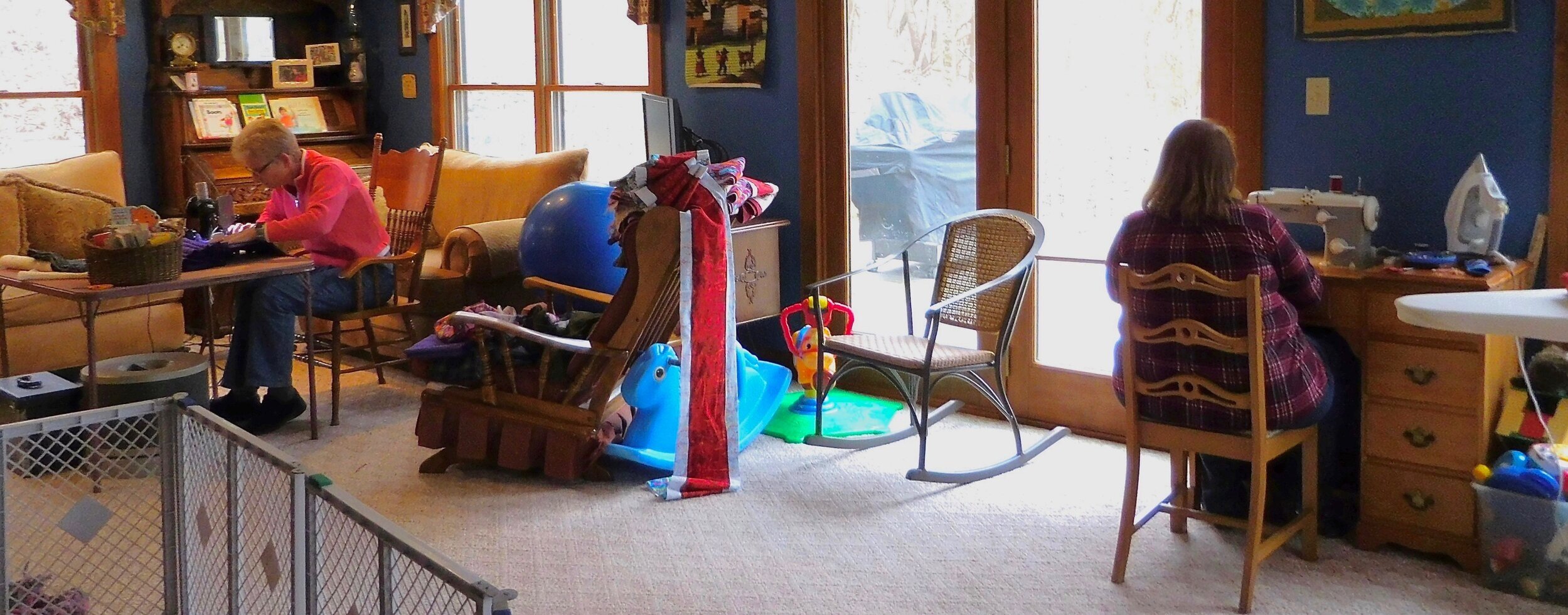
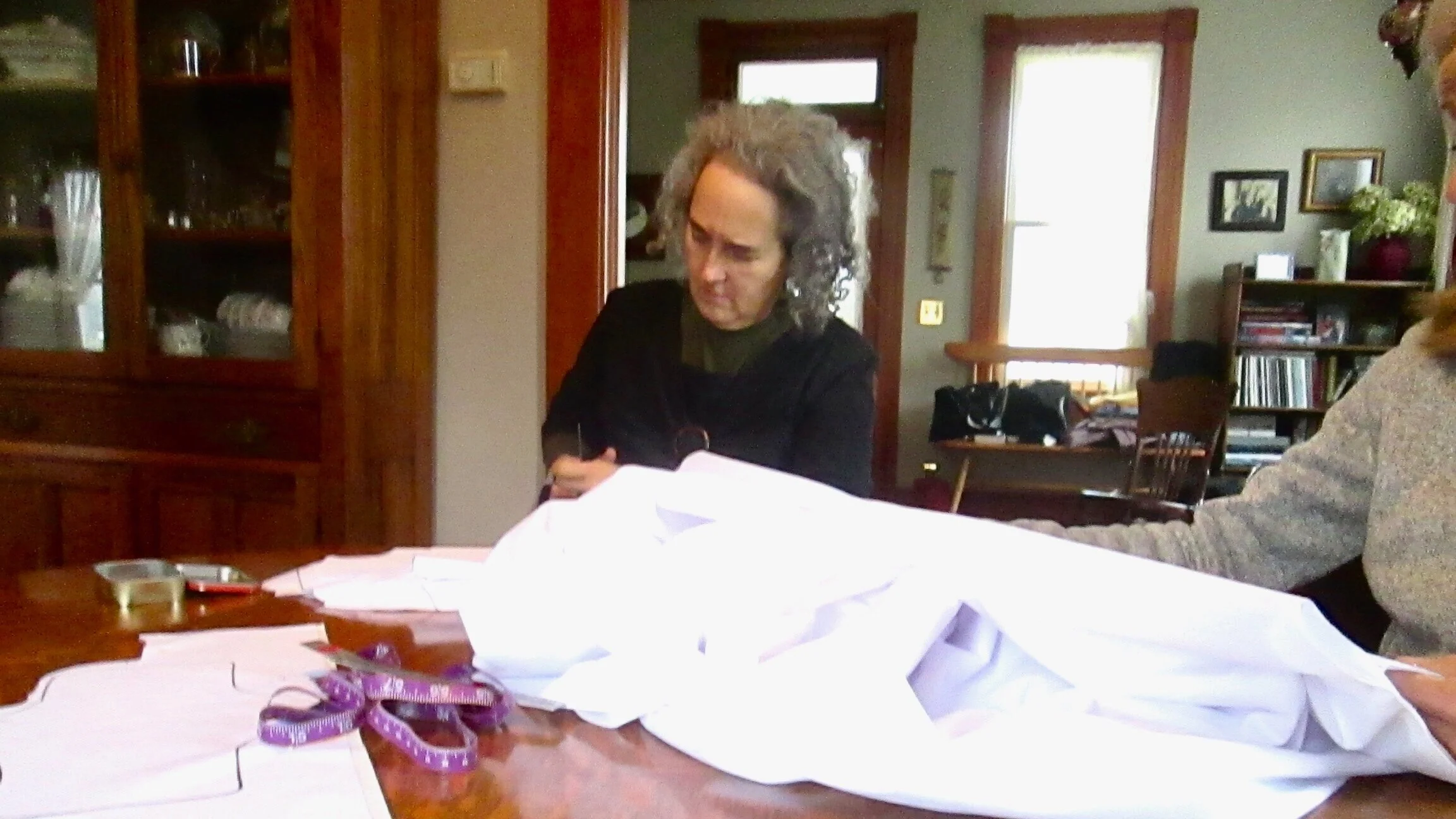
Here at home in Granville, Ohio, we are isolating as much as possible to avoid the spread of Covid-19 ourselves. About a week ago we were hearing from our friends in the medical community about the severe shortage of N95 face masks to help protect working medical professionals. So, we dug out some fabric previously purchased to make into privacy curtains for the midwives delivery room at the HAM clinic in Dumay. We couldn’t get it to Haiti, so why not sew a few face masks? Masks sewn with a cotton mix fabric offer less protection from the virus than N95 or commercial surgical facemasks, but they provide more protection from the virus than having nothing covering your face, and they do decrease the wearers ability to spread the virus to others.

These home-made masks are definitely not the solution to protect health care workers on the front lines and hopefully commercially made N95 quality masks will be available to them soon. But what about other front-line workers providing Essential Services, those at local pharmacies, grocery stores and food service businesses who continue to come in contact with the general public every day? Shouldn’t they be wearing face masks while working to protect themselves and others? Remember that 80% of those infected with COVID 19 have mild, or even no symptoms, and the incubation period during which time you can pass the disease to others is 14+ days.  Yes, all of these front-line, essential services workers should be wearing a face mask.  Furthermore, we should all be wearing face masks, or at least a bandana over our faces, whenever we are in public places interacting with people or contaminated surfaces.

We are now working with a community collective of about 20 friends and neighbors to sew 65 yards of Amy Butler Fabric, generously donated by the fabric designer herself, to supply our local Ross Market with 200 masks for their staff. Following the completion of that order we plan to continue to make and provide masks to other front-line workers in the community.

At Healing Art Missions, we hope everyone can find their own way to help slow the spread of COVID 19 and help to stop this pandemic from taking the lives of loved ones. Social Distancing, washing your hands, wearing a mask in public (when you must go out), and paying close attention to what the Public Health professionals in your area are saying.

Haiti in the Shadow of Covid-19

As you read this, I’m sure that like us most of you are isolating at home, worried and wondering what our world will look like in a few months. Just over 3 months ago it would have been unimaginable to think that the most wealthy and powerful country in the world, the U.S., would have over 137,000 cases of a Novel Corona Virus. That’s more than any other country on the globe, and our death toll of 2,500 to date steadily climbs each day. Even with all the resources the U.S. has, this pandemic is upending whatever “normalcy” we’ve grown to expect.

Now imagine the situation of people living in Haiti, one of the poorest and most densely populated countries on earth with an estimated population of 11 million. If you’ve been following our Newsletters you’ll know that even before this pandemic Haiti had basically become a failed state without a functional government where theft, violence and kidnapping have become commonplace. As for the Haitian medical system, a 2019 study published by the Research and Education Consortium for Acute Care in Haiti states there are only 124 ICU beds, with the capacity to ventilate 62 patients within ICUs in the entire country, and we know the countries unreliable power supply renders any ventilator use precarious at best. Now that Covid-19 has arrived on its shores, Haitians have a great deal to worry about.

All of that being said, there is good news from the Healing Art Missions Health Clinic in Dumay. It continues to operate serving the health care needs of the community with Medical Director, Dr. Jacques, working hard setting up protocols and training for clinic staff, as well as scrounging to find personal protective equipment such as face masks, gloves and hand sanitizer. He set up a community education program on how to avoid catching and spreading Covid-19 through constant hand washing and social distancing. He is currently looking to hire a local seamstress to sew face masks for members of the community, and for clinic use, if/when their supply of N95 masks run out. But the reality is that our clinic is not set up with an ICU or ventilators, so if anyone in the community succumbs to the pulmonary or respiratory complications from the virus, there is little we can do beyond medications, IV fluids, and Oxygen.

Doctors Tracee and Leslie had planned to return to Haiti in April, but that has been canceled for obvious reasons. For the time being, the best we can do from here in the U.S. is to provide moral support for Dr. Jacques and all the staff, help as best we can to make sure they have the supplies they need to do their jobs, and continue to pay them each month. Fortunately, we know from experience that the Haitian people are some of the most resilient people in the world.

Charles Salomon School Gets Days for Girls

In January, when doctors Tracee and Leslie were able to travel to Haiti for the first time in nine months, they brought supplies for a new program to be started at the Charles Salomon School. The program, Days for Girls, addresses a common problem in Haiti, the lack of access and affordability of menstruation supplies for girls and women. Without such supplies there is an increased risk of infection and girls are much less likely to attend school during their monthly menstruation cycle. Additionally, improved feminine hygiene can help reduce the social stigma around menstruation found in poor countries.

The Days for Girls program addresses this issue by providing girls who have entered puberty with reusable, cost-effective, personal hygiene kits. The pads can be washed with very little water and reused for several years. Healing Art Missions began this program at our health clinic in Dumay in 2018 and given the program’s success we are duplicating it at the Charles Salomon School in Port-de-Paix, our primary education project. The reusable hygiene kits include a drawstring bag containing absorbent tri-fold pads, moisture barrier shields, visual instructions, underware, soap, and a one-gallon zip-lock bag. Our programs at both the clinic and school provide Days for Girls kits at no cost.

The kits distributed for our Days for Girls program are produced by a group of dedicated volunteers in Granville and Amesville, Ohio, who sew and assemble the kits. It is because of the hard work of these volunteers that we are able to address this important need to the young women in the communities in Haiti we serve. Our great thanks go out to the volunteers who make this program possible are led by Catherine Hare and Nancy Dobbelaer include: Priscilla Hare, Sarah Bowles, Barb Hays, Debi Blevins, Lynne Genter, Janet Polzer, Natasha Alum, Julie Stout, Helene Wilson, Vicki Korner, Jane Good, Begonia Reina, Kathy Elasky, Rosie McAfee, Janet Botzum, Linda Lackey, Teresa Gould, Teresa Trout, Beth Ferrier, Marcia Burchby.

Back to School

Thanks to a generous grant from the Larson Legacy Fund, last summer the school received a major renovation completing the plastering and painting and the installation of a new solar power system and lighting in every classroom. However, because of the national lock-down in Haiti last year, most schools were not able to begin the school year in September, and this including the HAM funded Charles Salomon School in Port-de-Paix. But after relative calm in December the lock-down was removed and Haiti’s children started back at school in January. We are excited that the children of the Part au Paix neighborhood of Baudin-Gros Sable where the Charles Salomon School is located, are now finally able to enjoy their bright new classrooms.

LEARN MORE ABOUT THE CHARLES SALOMON SCHOOL


Doctors Tracee & Leslie Back In Haiti

Those who read this monthly Newsletter or follow HAM on social media are well aware of the civil and political unrest in Haiti over the past year. You also have an idea of the frustration founding medical director, Dr. Tracee Laing has felt in not being able to visit HAM’s medical clinic in Dumay for the last nine months. So, it was a great relief when Dr. Tracee and long time HAM board member, Dr. Leslie Mihalov, landed in Port-au-Prince and made it safely to the Dumay clinic on January 19th. The doctors arrival in Dumay brought more than just the supplies not available in Haiti they had been waiting to bring, more importantly they reinforced HAM’s commitment to the clinic staff and the community. The success of HAM’s programs in Haiti are built on a trusted partnership between HAM and the local community developed over the past 20 years. HAM’s commitment to the communities where we work does not waiver despite Haiti’s extreme civil and political problems, and our physical presence in those communities has always been, and remains, critical.

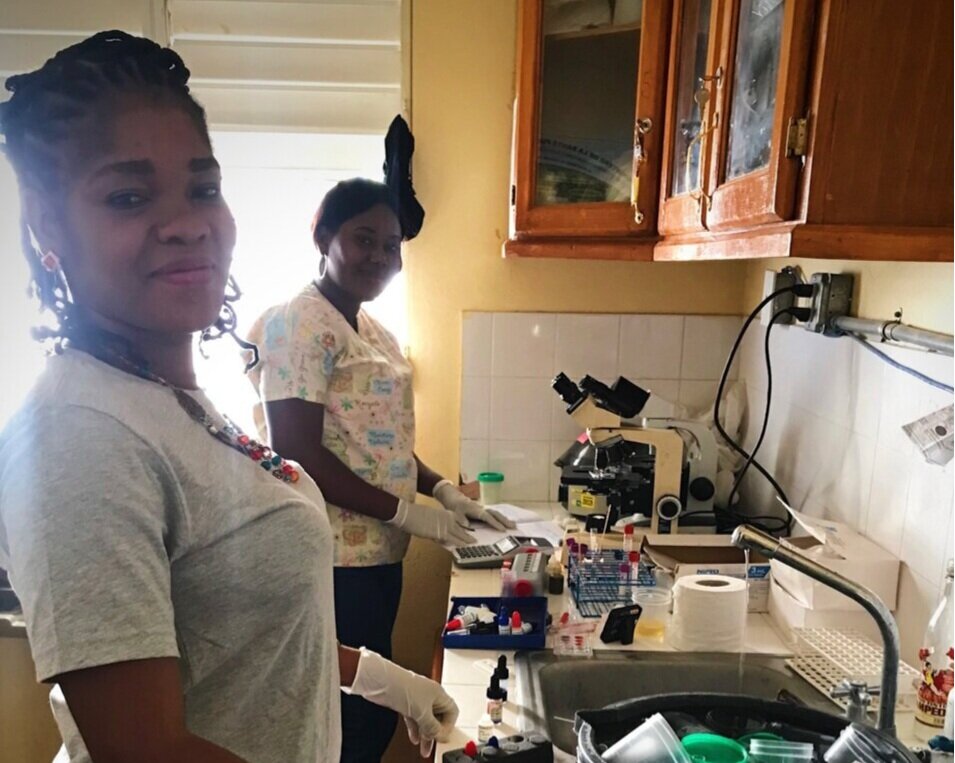
All of that said, the most striking take-away from Drs. Tracee and Leslie’s visit to Dumay was the clinic staff’s professionalism and commitment to the community, especially during such challenging times. While most of Haiti has been locked-down for six months in 2019 with hospitals, medical clinics, schools and many businesses shuttered, HAM’s Dumay clinic has remained open and staffed the entire time. When our doctors living in Port-au-Prince were not able travel safely to the clinic, our local staff led by head nurse Guerdy in phone contact with Haitian medical director, Dr. Jacques, continued seeing patients, performing lab tests, issuing prescriptions and delivering babies. Clinic operations weren’t affected by national power outages or fuel shortages as the clinic runs on solar power and our own water well and water purification systems. This allowed for the Dumay community to retain access to health care and clean water while the vast majority of Haitians were locked-out of such access.

During their week in Dumay, Drs. Tracee and Leslie performed their usual functions of supplementing the Haitian doctors treating patients, assisting Dr. Jacques with surgeries, performing home visits, and meeting with Dr. Jacques and all the department heads. You can read their posts from the trip on our Facebook and Instagram feeds to get a sense of their day-to-day activities. But the heroes of this story are our Haitians staff. While their country is in sociopolitical tatters with so many people losing their jobs or paychecks from the country wide lock-down, our staff kept the clinic open and operating close to normal. Their dedication, professionalism, and commitment to their community are truly exemplary. We are so proud of our Haitian staff whom have again proved that empowering Haitian and providing them with the necessary resources is a model for success.

January Mission Scheduled

The final month of 2019 brought a sharp reduction of sociopolitical chaos in Haiti, thankfully. Reports from coworkers and friends on the ground say there’s a level of calm not seen for several months and the Haitian people doing their best to resume some sense of “normalcy”, spending time with family and friends for the holidays. Our in-country project manager, Charles, was finally able to take the bus from his home in Port-de-Paix on the north coast of Haiti, 100 miles south to the Dumay clinic. Busses have not been running for months keeping Charles from visiting the clinic to check on operations and perform his other job with HAM as the eye technician who runs our eye clinic.

Head Nurse Guerdy with Patients

Head Nurse Guerdy with Patients

Despite Charles inability to travel cross country, the Dumay clinic has remained open, providing the community ongoing access to health care. As the majority of clinic staff live locally they have been able to continue operations even when it has been too dangerous for our medical director, Dr. Jacques, to travel the seven miles (as the crow flies) from his home in Port-au-Prince. Head nurse Guerdy has been instrumental in attending to patient care whenever Dr. Jacques has been stuck at home. The Lab, Pharmacy, Midwives and clean water programs have all continued. Our driver, Reginald, who also lives in Port-au-Prince, has been able to run supplies to the clinic whenever possible and because the clinic is entirely powered by solar our ability to maintain patient care has been minimally impacted. Additionally, schools reopened in early December so the Charles Solomon School in Port-de-Paix has welcomed students to freshly plastered, painted and lighting powered by their new solar array all completed over the summer. To read more about the recent school facility upgrades, click HERE and scroll down to the October 1st blog post.

While no one knows what the new year holds for Haiti, Dr. Tracee plans to return there the third week of January for the first time since April 2019. The importance of this upcoming trip cannot be understated as we have medical equipment parts and medicines to transport that are not available in Haiti. Additionally, this is the longest period of time Dr. Tracee has been away from Dumay since her first trip in 1997 and it is important that the community knows we will not abandon them during these difficult times. Dr. Leslie and Susan Palleschi plan to join Dr. Tracee on this upcoming January trip.

Make a Difference This December 3rd on GIVING TUESDAY

Have you heard of GivingTuesday?! GivingTuesday is a global generosity movement unleashing the power of people and organizations to transform their communities and the world. Sounds amazing right? It is! It’s one day that is dedicated to encouraging others to make a positive change in the world! You can make a difference and are encouraged to join thousands of others who participate in this transformational gesture. This year GivingTuesday falls on December 3, 2019. To find out more please visit givingtuesday.com.

For 20 years, Healing Art Missions has helped support the people of Haiti. Our focus is to provide resources and funding to rural communities that lack access to basic resources, such as healthcare, education, employment, and clean drinking water. The lack of these resources creates the condition of structural poverty. Our aim is to support Haitians by providing access to these fundamental human rights. We are committed to fostering the dignity of the individual, respecting the ways of the community, and reflecting the strength of a loving God.

MAKE A DIFFERENCE ON GIVINGTUESDAY

Your contribution directly impacts the lives of people living in Haiti. It allows us to continue our work, and support individuals in Haiti through maintaining access to basic human rights services such as healthcare, education, clean water, and employment. Click HERE to find out more ways to get involved with Healing Art Missions!

Give Today
Dr. Tracee and Dr. Leslie visiting a homebound patient.jpg